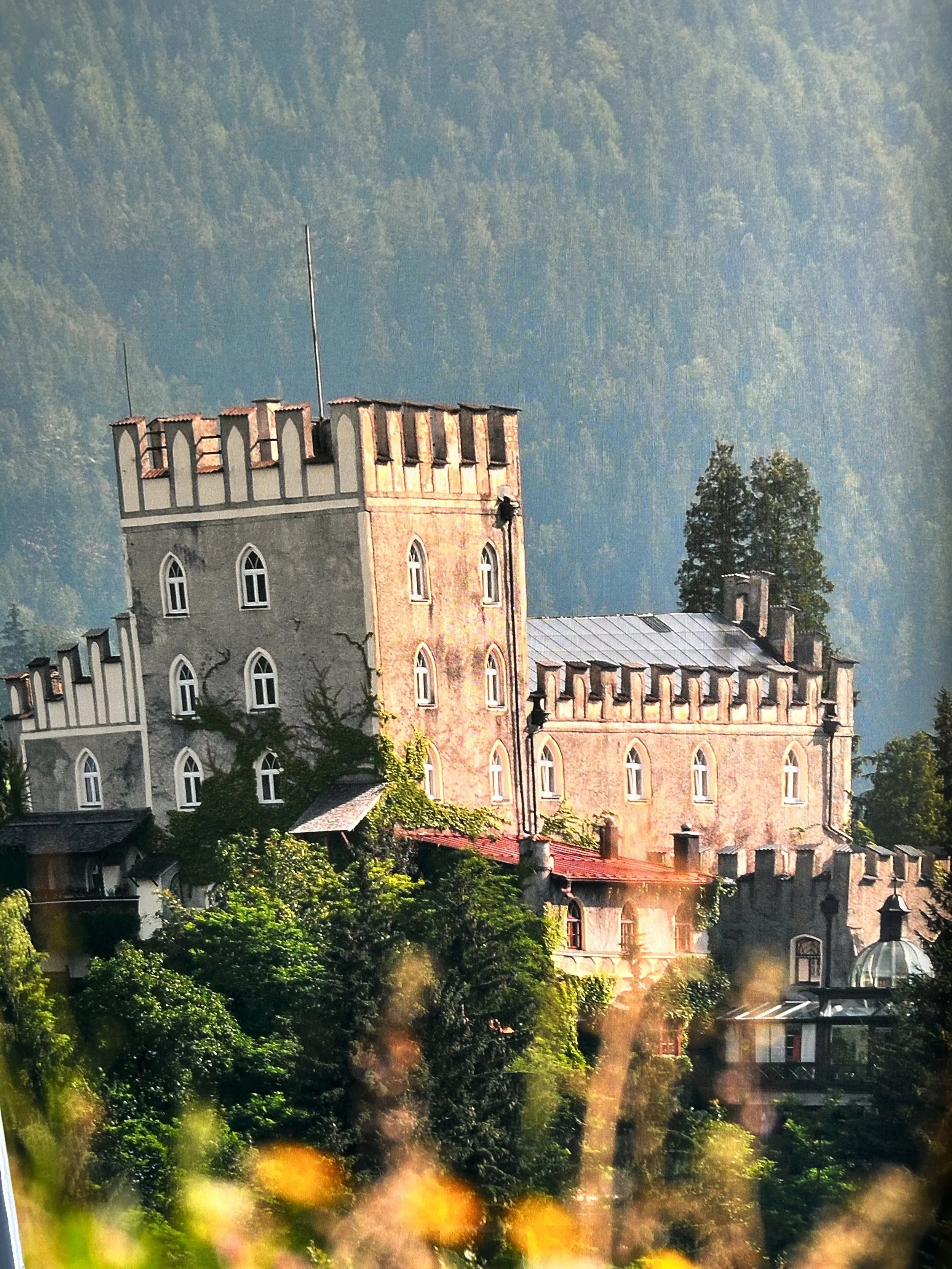
Castle Itter
This is an article I wrote for the website Atlas Obscura. They are a website full of interesting and mostly off the beaten path sites. They made some additional edits before posting it on their site, but this is the original article (for what it’s worth).
In the waning days of the European Theater of World War II an unlikely coalition of German and American forces guarded a select group of abandoned Nazi “honor” prisoners against the Waffen SS. It is the only joint American-German action of the war, and the only time American forces defended a medieval fortification.
Schloss Itter, or Castle Itter, in Itter, Austria was first built in the ninth century by Bavarians. It changed hands many times belonging to bishops from Regensburg, to Salzburg before being partially destroyed and rebuilt in the early 1500s. After belonging to the Holy Roman Emperor and again falling into disrepair, in the late 1800s it was bought by a man who planned to turn it into a hotel. That idea failed quickly and the castle became a private residence changing hands until it was again turned into a hotel in the early part of the 20th century. Then after the Anschluss of Austria it was tapped to become a prison for high value detainees of the Third Reich. That role began in May of 1943 and lasted for two years.
Once Hitler killed himself soldiers on both sides knew that the outcome was imminent. Most had no desire to be the last casualty of the war. The commander and warden of the prisoners, feeling the cause was lost, left in the early morning hours of early May 1945 after which the remaining guards also fled giving the castle to the former prisoners. This presented them with a precarious position as the Waffen SS troops were ranging the countryside looking for deserters, enemies, or people who were trying to surrender in advance of the American arrival. In this gap a highly decorated SS Officer, SS-Hauptsturmfuehrer Kurt-Siegfried Schrader, a Wehrmacht Major, Josef “Sepp” Gangl, and his troops joined an American Tank Company Commander, Captain John “Jack” Carey Lee, Jr., in protecting the prisoners and defending the castle.
Prior to the guard and warden departing the schloss, Schrader had become known to the prisoners in addition to becoming disillusioned with the Nazi ideology. Gangl had become similarly disillusioned and both independently had connected with the Austrian resistance. Upon hearing the prisoners were unguarded Schrader came to the castle and guaranteed their safety. Gangl, now serving as the head of the resistance and therefore protector of the town, had been planning on mounting a rescue mission of the prisoners but knew the forces under his command would not be sufficient against the Waffen-SS forces operating in the area. The only chance would be to hasten the arrival of the Americans. So he took off to find them in Kufstein.
Not long after arriving in Kufstein Gangl met up with Lee and they began plotting. After a reconnaissance mission, Lee brought his closest friend with both of their Sherman Tanks to the defense of Schloss Itter. Along the way sketchy infrastructure caused one tank and crew to be left behind. Eventually they arrived and set up defensive positions. The tank was backed across a narrow bridge since there was no room to turn around on the castle side. The Wehrmacht soldiers and few Americans were given positions, the prisoners were instructed to remain in the cellar and the stage was set.
The Waffen-SS attacked in the early morning hours of 5 May. Between 100 and 150 troops began the assault on the castle. The only way of communicating with the outside world was the telephone, but Gangl contacted the remaining resistance members in the nearby town of Woergl. The Sherman tank provided machine gun coverage until it was destroyed though the Americans in the tank were able to get away. One Wehrmacht soldier deserted during the fighting but the remaining American-German defenses held until more American troops from the 142nd Infantry Regiment arrived twelve hours after the fighting had begun. The 142nd troops promptly defeated the Waffen-SS and what was perhaps last battle of the war in Europe was over.
Today the Castle is again owned by a private owner and is not open to the public. But it stands in a picturesque location in the Tyrol region of Austria as a monument to the strangest alliance of World War II.