Life Back Outside the Comfort Bubble
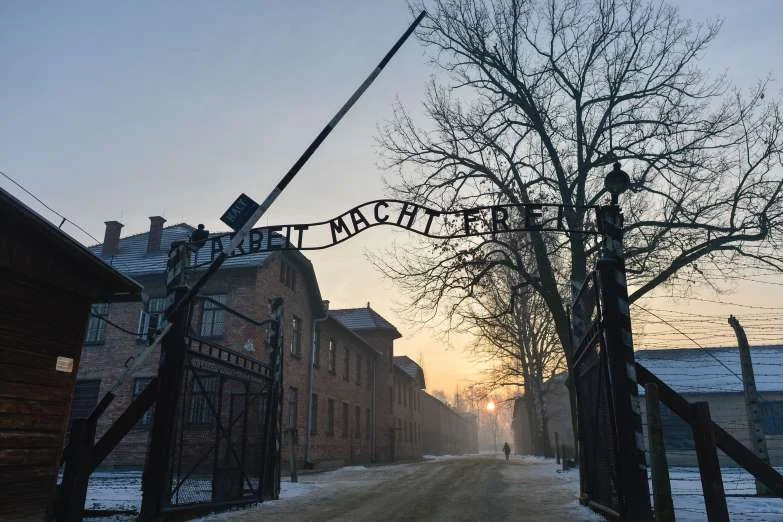
Auschwitz
This was is near to my heart. Partly because I got to share it with my daughter, but mostly because of where we went.
Typically speaking, when one sees or experiences something it is best to record your thoughts as soon afterwords as possible or else something may be lost and forgotten. But there is nothing typical about a trip to Auschwitz. I started this description not long after our visit in 2016 but did not complete it or post it. Now, after 2 years and a visit to another camp I have returned. No less changed and no less awed by the power of the visit.
Joseph Stalin is reputed to have said “One death is a tragedy; one million a statistic.” I say reputed because the exact wording and context are not known as well. Also at issue is whether or not he was the first to espouse the concept. He was not.
In 1759 Beilby Porteus, who later went on to become the Bishop of the Church of England, wrote Death: A Poetical Essay in which he said:
’Twas not enough
By subtle fraud to snatch a single life,
Puny impiety! whole kingdoms fell
To sate the lust of power: more horrid still,
The foulest stain and scandal of our nature
Became its boast. One murder made a Villain,
Millions a Hero. Princes were privileg’d
To kill, and numbers sanctified the crime.
Ah! why will Kings forget that they are Men?
And Men that they are brethren?
This is a sentiment that was repeated by Charlie Chaplin in Monsieur Verdoux in 1947: “That’s the history of many a big business. Wars, conflict, it’s all business. One murder makes a villain, millions a hero. Numbers sanctify my good fellow.”
Mother Teresa, whose canonization for sainthood is likely to be soon, once said, “If I look at the mass I will never act.”
If Mother Teresa and Joseph Stalin seem to agree it gives pause for thought. Bishop Porteus echoed in a Charlie Chaplin movie may seem a stretch, but Chaplin shared a birthday and had his trademark mustache copied by a man who would be king. A man who thought himself a hero. A man who made others think him a hero. A man who forgot he was a man, perhaps on purpose.
From the text of affidavit signed by Rudolf Hoess on 5 Apr 46 the former commander of Auschwitz estimated at least 2.5 million victims were executed and exterminated by gassing or burning, and at least another half million by starvation or disease making a total dead of 3 million. Hoess estimated this to be 70-80% of the people sent there as prisoners. Maybe he overestimated, maybe he couldn't count, but never forget, these fuckers kept meticulous records even though they began to destroy them when the enemy was at the gates.
The sheer magnitude of what occurred numbs the mind. The surreal power of the place 70 years later has the same effect.
By the time we arrived in Oswiecim, Poland it was not a dark and stormy night, but it was a dark, wet, and dreary night. The view from our window at the Hotel Galicja had two deserted loading docks on one side and a big empty field with a well worn footpath alongside a babbling stream. The overcast fog and light drizzle covered the cold night air. The tone was well set for the next day's event.
The sunrise brought no relief. The sky was overcast and gray with a light sprinkling of rain. The temperature was cold, downright bone chilling. There could be no better weather for a visit. This is a place I never in a million years imagined I would be. But here I was with my seventeen year old daughter, Lizi.
Germans had a history of renaming Polish towns even before they were a country. But this was different. The town was renamed by the Nazi invaders who then used on the camp. Over the course of the camp’s existence they also removed the inhabitants of the town and brought in new settlers. They were removed partly to keep secret what was happening, partly to keep residents from helping escapees, and partly because the whole justification of taking over Poland was to provide liebenstraum for the German people. Not so much to subjugate the people as to eliminate and make room for agriculture to provide for the Reich.
It began as a Polish military barracks, evacuated and abandoned but repurposed as an overflow location for the town’s prison facilities. As the former allied Soviet Union was turned on by the Reich, Soviet prisoners of war were interred as well as interned there. The list of prisoners continued to grow to include Jews, Romanies (Gypsies). Contrary to Hoess's numbers, it is estimated to have contained 1.3 million people over the course of its lifespan. Lifespan doesn’t feel appropriate yet there is no antonym that does.
Of those people, 1.1 million perished. By gas, by starvation, by lack of oxygen, by disease, by hanging, or by being shot, there was little difference how. Most of the rest were shipped to other locations deep in the Reich as the Red Army advanced late in the war. The crematoriums and gas chambers were sabotaged or destroyed. The wall where prisoners were shot was torn down. The gallows were removed, and many records burned to hide what had happened. A mere 7,500 remained to be liberated, 500 of which were estimated to be children. For all its infamous brutality it had been an efficient extermination center.
The best way is to reserve a tour guide which takes several days advance preparation. While we knew when we were going, by the time we looked there were only Polish and German slots available and even then only one each. There are also 6 hour and multiple day introspective tours given but we knew those were not for us. The gates opened at 8 but you have to enter before 10 or after 3 if you tour at your own pace.
Walking up you can see the buildings and the fence. The iconic concrete post, barbed wire fence. Rusted, weathered, dirty, and in places moldy. Some features and buildings were recreated or rebuilt, some were restored, some were left in their original condition. The fence was original. The surreality of it began to hit as we walked up to a trailer that said “Info” to get our tickets. This was not a place that topped the list of must see locations but it was certainly on the list of places I never imagined I would ever be able to see. Standing in line memories popped into my head, Mr. Belvel’s history class, black and white newsreel films, The World at War on PBS, Schindler’s List.
The bookstore had tour guides and more. We entered and looked at the books while the cashier completed the transaction with the three guys at his counter. Most of the books were sterile and un-attractive bindings. There was no brightening up the subject matter. I grew up in a tourist town. Normally doing tourist activities are things I’ve seen others do and recognize but haven’t participated in myself. As we turned to the cashier I could tell he was good. He had laid out pamphlet and handed us a tour guide as he explained the pamphlet and another I swear he materialized from his hand. The documents were all in English. We’ve gotten spoiled since almost every German we have dealt with since moving spoke our language, too. In Poland it was not the same. It took 4 people to take our order at McDonald’s but here this guy knew tourists. After we walked out I remembered that now I would have to carry the books and DVD through the whole tour but how to do that was secondary to the entrance.
Arbeit Macht Frei.
Maybe it was intended to be true when it first went up. Maybe it was a psychological ploy to give the semblance of a chance for freedom. Maybe it was just a promise that would never be fulfilled. Maybe it was intended to be just what it is: a symbol of what lay ahead, a sinister sick joke to say abandon all hope ye who enter here. But there it was. As large as life. Life sized. Again life seems a word that should not be used to describe the structures of this place. In person, not fabricated, not on television, not in a movie, not on a grainy black and white PBS special. I touched the gates of THE symbol of terror, genocide, and the Holocaust.
There were many exhibits set up in the former barracks. One block was set up for each group of detainees: Soviets, french, Belgium, Netherlands, Romanies. I could easily spend a paragraph on each and it would never be enough. In the Hungarian display there was the sound of a heartbeat. Eerie, spooky, and chilling. In the french and Belgian display they had train sounds and a plexiglass covered set of tracks depicting the cattle cars that brought the prisoners in.
At a display of uniforms there were many original sets of clothes hung on makeshift frames behind barbed wire. Unlike the United States, in Germany they do not protect you from yourself. If you want to do something stupid (or against the rules) you can. Tactile memories can make one feel a part of what went on and I find myself touching the wall, or the stair rails, or whatever historic venue I happen to be at. These uniforms were not for touching. I didn’t touch the closest ones, I bent over as far as I could and grabbed one. The coarse weave of the material had a utilitarian, uncomfortable feel to it.
Outside Block 11 there were a family of owls living. Block 11 is where most of the executions were carried out. It is where the first test of Zyclon B was done. It is where the optimal density, timing, and amounts needed were determined. Owls hoot into the now silent building of such suffering.
We were traveling alone, just the two of us but there were may groups there. For the most part we tried to avoid going into buildings with them. It did not always work. In one building we failed miserably to avoid them. Even with ventilation and lighting it was dark and stuffy, especially with too many people.The mass of people filing through the basement was bad. Slow, shuffling, muffled. No one spoke. One line headed down the hall another back. But we had space. Personal space we all gave each other as much as possible. As close as we would get to what had happened, yet not. It would have been indescribable back then. Downright claustrophobia inducing.
We walked between the buildings where most of the executions were carried out. And past the gallows, and the daily roll call. The condition of the roads was similar to what it was 70 years ago. Gravel with imperfections, potholes with water. Misty rain. It reminded me of the Rudyard Kipling story that convinced him to be against capital punishment where a man, literally on the way to his death, avoided a puddle.
There was a display of cloth made entirely of human hair. It was not a small bolt. There was a tangled mass of wires that when you got close to it were wire-rimmed glasses. Thrown there because their owners did not need them any more and they would not burn. There were rooms full of pottery, family heirlooms, and my God the luggage. Suitcases with the hopeful, hastily scratched addresses of their former owners on them. Hopeful because they believed they would be reunited with them again. And the room of shoes. If I one day honed my writing craft to the level that earned me the Nobel Prize for Literature I would never be able to describe the room of shoes. Not a small room, a hallway lined on both sides with an unimaginable pile of shoes. Except for one detail. It was imaginable because it exists. It sits there behind glass paned windows for all to see.
At the tender age of 14 I read Poland by James Michener. In it he describes an event based on a true story of a room in the basement of Auschwitz where the guards crammed more people than could fit. One small window provided all the air the room would receive yet the cruel men in charge locked the door and left. In the story a priest told a man the fool’s move was to fight for a spot at the window to breath, better to hang back by the door. There would be room, not much air but room. At the end of the night, the man survived along with the priest. There were not many more that walked out alive.
I saw that room.
I cannot recall if the room was accessible, but I know I came nowhere near that window. I stood at the door and could not imagine a more poignant moment to bring home the power of what this place was. I was wrong.
Near the end of our tour we came to the gallows beside the cremation chamber where Hoess had hung. He was hung within sight of the barracks, beside the cremation chamber, while being able to see the very location he and his family, his wife, his children had spent their lives, cheerily. That fucker hung until he ceased to breathe and he got off easy. While I enjoyed reading about and seeing where he had lived his last second something else happened. As I finished taking a picture I looked for my daughter. She was nowhere to be seen.
I had lost my child in Auschwitz. At the crematorium.
Full on panic set in. Hurriedly scanning the crowds. Running to the other end of the line of people walking somberly, soulfully, and mournfully from barracks to gallows to crematorium entrance. No sight of her.
Backtracking I stood on a small hill and looked in every direction. Nothing. Ran to the other end of the sidewalk and another hill. Nothing. The hill was the crematorium but not the point. She was not there.
As she emerged from the exit of the crematorium my heart began to beat again. She told me she went on through, so I asked if she wanted to wait while I did. Without hesitating she said no. Arm in arm we walked into the crematorium.
In the face of the advancing Soviets this crematorium had been destroyed. The callous cretins knew they were doing things they should not have done because no one hides if what they’re doing is right. They were unsuccessful. As a part of the memorial it was restored to safe conditions. Safe. A truly relative term. The rooms were there. The ovens. The rails and carts that made the task easier. After we came out Lizi told me that there was one place in particular that gave her the shivers. It did so both times.
So we walked out. Like a mere 0.25% of the former occupants had.
The tour guides online all said to allow 90 minutes each for Auschwitz and Auschwitz II-Birkenau. We spent four hours in just Auschwitz. On the way out I commented to Lizi who said it didn’t seem that long. When asked how long it had been she said no more than three and a half tops. But it was four, long, surreal hours.
Next door to Auschwitz is an apartment complex. And I don’t mean a few hundred meters away. I mean right there at the wall, a parking lot or less away is an apartment complex. Several stories high, which means that there is someone who looks out their window and can see over the top of the wall, over the barbed wire, and into the heart of the barracks of this former extermination camp. I think I would rather live in a cemetery homeless.
Over the course of my life I have experienced prejudice, sexual harassment, and discrimination. I have been racially profiled and even pulled over for driving while white. I have not complained or pushed these incidents because I know that the intensity of them is nothing compared to what others feel. It is just as wrong, but not on an equal level. I know my experiences at this camp of death does not rise to the level of any given Tuesday when it was in operation. But they are no less powerful for having happened to me. If anything it has strengthened my resolve to meet someone who has experienced this nightmare firsthand.
There is so much to hate about what is and what was done in this place but one thing that struck me was at the entrance. That powerful, symbolic entrance gate, in harsh black letters, Arbeit Macht Frei, has a crowd control black and white barrier similar to many roads, sidewalks, and paths around the country. One that means do not enter, or when up to come on in. There is such a pole at the iconic gate. There is no way to photograph the gate without the pole. This got me to thinking and in the time since our visit I have gone back to see and notice this pole. It is always there. In every shot. Every video, every photograph, omnipresent. And always up. Presumably they close the arm, why else have it? But they do not allow anyone into the grounds without opening it. Even the private photographers that come before or after visitors. It. Is. Always. There. It is a giant middle finger sticking straight in the air to say youu made this a place of death and despair now fuck you we have gained our freedom.


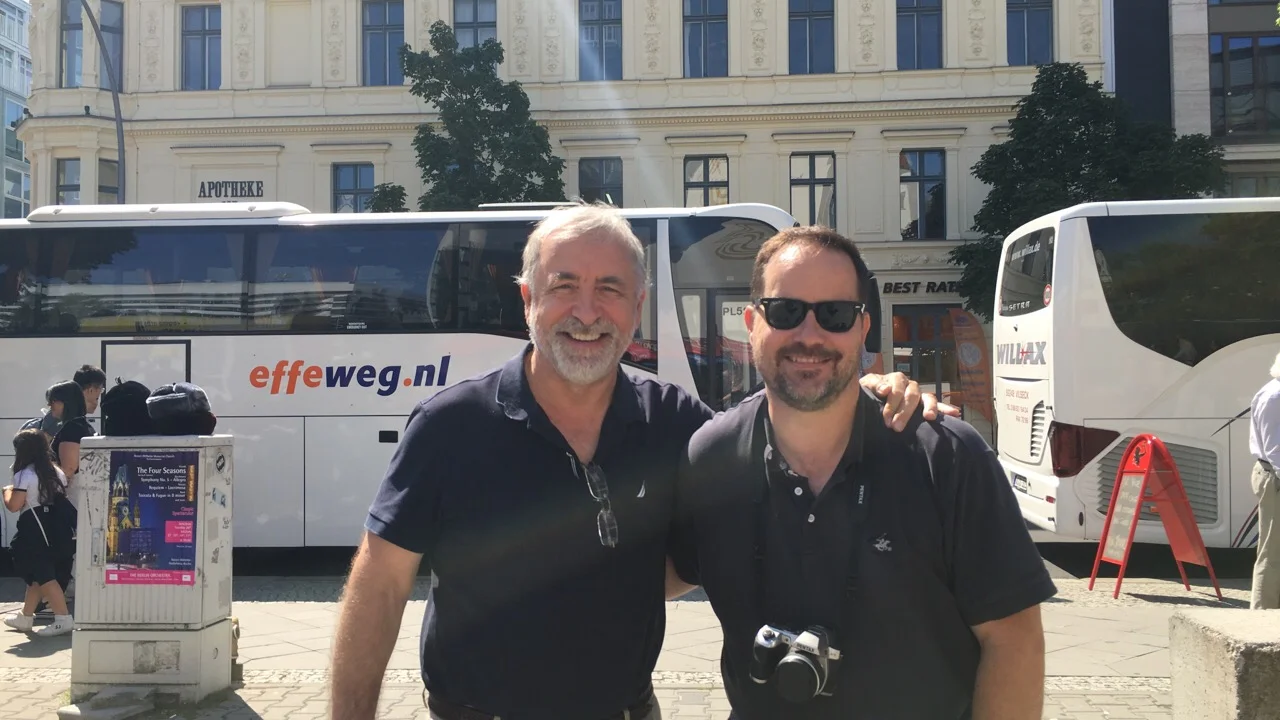
Meeting around the world
I have long said Serendipity takes me everywhere. From time to time I have an incident that I can use to prove it. Yesterday was one of those incidents.
On the way back from the US last Saturday I began talking to a guy sitting behind me. I had flown from Mobile to Houston from which the flights would go to Newark then Munich. This gentleman and his wife were headed to Geneva but would be in Berlin the next weekend. My plan was to either go to Muenster to see the Anabaptist cages atop the steeple or to Berlin so I mentioned I might be there, too. He gave me his card and after landing in New Jersey went our different ways.
Friday night I looked at the map, Berlin is a huge city in case you didn't notice, and saw that where I figured our bus would be was near their hotel which in turn was near the two sites I most wanted to see. Unfortunately I missed both but that's a different story. I emailed him in the hopes that we might meet up to break bread or at least have a coffee or beer.
Upon arrival in Berlin we had a native Berliner (not the doughnut) join our group and took a tour of the whole city. We made stops at the Brandenburg Gate (where I hummed the Concertos, thank you Mr. Blessey), the Wall, and Checkpoint Charlie.
At Checkpoint Charlie I walked around and took in the sights. I found it particularly interesting to watch one lady drive through the intersection without even checking up on the gas going from the former West to former East Berlin. Arriving back at the bus I had about 5 minutes until we left when I thought to check my email again. He had responded about forty-five minutes before and said they'd be at Checkpoint Charlie for about an hour.
Hastily I went to my other phone where I had saved his number and to my dismay I did not save the number just the email. As I reached into my pocket to pull out his business card, who do you think walked in front of me? Mr. Lopushansky.
We only had a few minutes to laugh and comment about the unlikeliness of what had just transpired. He had just told his wife something told him he needed to go across the street when they met me. She took our picture a few times and we shook hands. We both parted with a smile on our face and the thought in our minds that no matter how much of this great big world we see it just keeps getting smaller and smaller.
Driving
While not being able to sleep this morning I stumbled across my Scrivener file full of notes for writing about Germany. Some of them I’ve used already but some still sit patiently for me to more fully flesh them out. This is one of those topics.
I am a Traffic and Transportation Engineer. It’s just what I am. I don’t get to work much in that field doing what I do for the Corps of Engineers, but that changes nothing. So of course my first observations about Europe involved vehicles and the driving experience.
For one thing, they put the traffic signals too close to the stop line here. Most Germans stop well short of the line so they can see but as Americans who are used to being right there at the line we pull up then lean over trying to get a look. The funny thing is that we do that in the US to minimize the lost time—the time between the light changing and vehicles moving. But here, before the light changes to green it changes to yellow giving a warning that it’s about to happen. I had long theorized that a similar action would help, coming here I learned it absolutely does.
In france, they add small lights at the base of the pole. At first I thought this was great because you can see without hunching over, but in Paris in particular this is unnecessary. You do not need to pay attention to the lights at all because when it turns green some frog behind you will honk. Whether the intersection is clear or there is a tangled mass of cars in both directions interwoven in such a way that no one can move. Which happens a lot. By the way, my advice about driving in Paris is never do that.
An adjustment though, is no right turn on red. The only positive thing California has given to traffic flow is not allowed here except in very limited circumstances. And by very limited I mean mostly only on the American installations but not even all the time there. Hard to get used to.
And no, the California roll stop is not a positive contribution to traffic flow.
People here use turn signals. Like they’re supposed to. All the time. And no one drives around with their parking lights on. Ever. Also, no one drives with the hazard lights on unless there is a hazard. If you see hazard lights in front of you one of three things has happened: they’re on the side of the road because a vehicle is broken down, a slow moving vehicle or truck with trailer is ahead of you (like 50 kph below speed limit slower), or all the traffic in front has stopped and the vehicle has put on the hazard lights to warn you that you’d best slow down because you’re about to stop. FYI, literally going 90 to nothing stinks. Going from 150 kph to 0 kph because of a stau means that all the time you just knocked off your GPS estimated time of arrival is about to get added back on.
Few people realize this, but in the United States there is never an instance when you have the right of way. Technically, you only have the right of way yielded to you. There is no textbook, driver’s manual, or law enforcement training that will ever say that one vehicle has the right of way over the other, only indications of which vehicle has to yield. That is not the case in Germany. In Germany vehicles often get the right of way. Occasionally they brazenly advertise the fact that they have it, but rarely. More often than not the most you get is a stern glance or dirty look from another driver because they had the right of way but you took it. Civility rules the day. If there is a car on your side of the road parked, the oncoming traffic goes until there is no more, then you go. If the lane merges into the lane on the right or left you drive to the merge point where one car from each lane goes at a time. Uniformly, civilly, logically, and as a traffic guy I’d say beautifully.
On the autobahn things flow nice. People are not afraid to pass up a Polizei vehicle. Even when you’re driving faster than 90 mph. For my part I have approached them at over 100 mph but always slow down to between 90 and 100 mph because it just doesn’t feel right. Sure is nice to not have to clean out my shorts afterwords though. People only pass on the left, because it’s the law. They stay to the right, because it’s the law. They also build the lanes anticipating that most traffic will be in the right lanes rather than a uniform thickness as we do in the US but that’s a different matter. Strangely enough, if you absolutely have to pass on the right (because you’re that big an asshole) you pass on the shoulder. First it’s not a breakdown lane because you can get fined for breaking down on the autobahn, but second, passing on the shoulder is improper lane use which is a cheaper fine than passing on the right.
I also happen to be a pedestrian expert, though I don’t like to walk myself. Germany is full of walking and biking paths to include lanes on the road and an awesome interconnected network of paths. One day while driving on a road through a field I saw a man with a walker out for a stroll. He was a good 500 meters from the nearest structure but he wasn’t headed towards it. He was headed further into the woods. These people take their exercise and outdoor time very seriously.
Another incident was when I was stopped at a railroad crossing in some out of the way town. There are few freight trains here, mostly passenger. They are all run by one company and would classify as a source of a blog post all by themselves but not my point here. While waiting a guy road up, this was about 2200 so 10 pm, on a bike smoking a cigarette. He didn’t light up when he stopped, he was riding and smoking. Here bicycles are not just for exercise, they are for getting around.
But overall I’d have to say that one of the first things I noticed that really stood out to me is the number of streets named Martin Luther. I’m used to streets named Martin Luther King, but here, they honor his namesake. A wide awake moment of realization that I’m not in Kansas anymore.
Rearranging Things
I have begun to get back to writing more regularly now, and I have not one but two draft posts started before I traveled back from Lower Alabama to Germany but instead of working on those on the trip I decided to rearrange a few things instead.
In addition to the being the third host of my website (Wordpress Hosted, Self-Hosted Wordpress, and now Squarespace), this is also the third major shift in tone and subject for my website. What started out as The Hole on the End of the Bible Belt turned into A Year Without Wearing a Tie, On a 30,000 foot level there hasn't really been any change. Just a refinement of what/how I have picked my subjects. There is a logical progression that has occurred. But for clarification it is now split into the three spots.
This isn't the last time I plan on shuffling the site. I intend to add in some of my non-blog writings soon. I'm also considering pulling out of the posts I'm the proudest of to put in an archive. I'll let you know when that happens, too. Meanwhile, if you have a suggestion feel free to comment below and I'll see what I can do to accommodate.
More soon, and thanks for hanging with me through the complete transition. When it's done it will be much better than when it started.
Kid Adult of an Adult Kid
Last night as I discussed my adult children's plans for today and tomorrow I kept repeating that they had no plan. While my patient wife Ginger agreed with me, she also asked me if I remembered when we were running around my parent's house with them asking us "What's the plan?" To which of course we had no answer. We had the overarching plan, but none of the details to fill it in. Nothing that showed how we would make it happen. Sort of exactly similar to what my kids seem to have now. A good plan short on details.
It isn't easy. As a parent we would rather take the pain, the inconvenience, the tribulations leaving them the undamaged joys of life. But that doesn't always happen. By 'doesn't' I mean 'can't' and by 'always' I mean 'ever.' It's so easy for us to see exactly what our children need to do yet so hard for us to tell them. We denied that we were like our parents until we grew old enough to realize we were exactly like them. We see our kids are exactly like us yet watch them deny it.
Personally I was amazed at both how smart my folks were and how quickly they went from complete idiot to genius as I progressed from the ages of 17 to 25. It appears that right now I am smack dab in the middle of that range for my oldest but it isn't satisfying to merely sit back and relish in the amount of wisdom I gain daily without any effort.
My Dad has recommended lots of books to me. A good number I've read, especially The Rising Tide by John Barry. This book tied together so many of my loves from my childhood and life now that it was incredible. In reading it he learned some of the things I knew (namely engineering, the Corps of Engineers, 19th century technology) that sent me down the path I'm on and I learned more about fascinating subjects he knew better including how Huey P. Long and Herbert Hoover rose to prominence and power, how New Orleans lost its place of authoritative control in Louisiana and the US, and a more thorough understanding of how deeply-seated the distrust and hatred of the Corps of Engineers is in the lower Mississippi River.
But this is merely the latest in a long list of recommendations. A much shorter list is the one that I've sent back to him. Last week he came over after we had recovered from our enjoyable flight and among other things he mentioned a phone call he had received for me. This call was about The Third Door. I was able to get into the group of advanced readers for the book. For those in the know, I took the Third Door into The Third Door. Since I was overseas it made it hard to get a physical copy of the book, however, that issued worked itself out and I was able to read it in advance of its publishing.
Phenomenal read. I couldn't put it down from start to finish. Oh, I stopped at times to admire the writing and its impactful words, but I never put it down. When I wrote my reviews I hoped that it might inspire others to read it, but little did I know it actually worked. My Dad in a very matter of factly manner told me that he said it all sounded interesting. He knew what kind of books he recommended to me that i liked and as a result, he figured he might like this one. He got a copy and it is on his reading list.
When we're young we strive to be grown and accepted. We yearn for positions, not necessarily of power, but of influence. To be taken as serious, persuasive, intelligent, perhaps even experts at something. But it doesn't arrive in a bang or with fanfare. The next step on the road of life is merely another step. It is just one more piece of traveled ground. Ground that everyone has to travel on their own whether it takes you further away or closer to home. Becoming a true grownup, or just no longer being a child, never gets easier or faster and no matter how hard we try we will never be able to make the parallel lines cross. We can however marvel in their similarities.
Travel Chicken or Travel Egg
The age old question of which came first, the chicken on the egg, is easy to answer, but recently I added a similar wrinkle to a question I’ve been asking myself for a while. That question is: Do I like to travel and therefore end up finding myself in airport terminals, bus depots, train stations, and truck stops or do I find myself in airport terminals, bus depots, train stations, and truck stops and as a result like to travel?
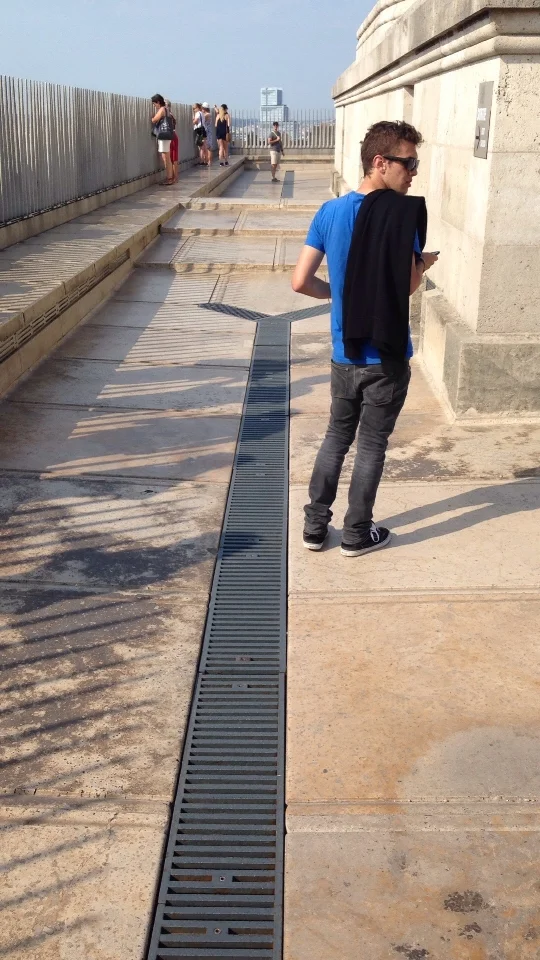
By itself It seems a weird question. Who likes to end up in these crowded public spaces that are so vastly different architecturally, functionally, and geographically that often end up being the worst part of the travel experience? My longest work in progress is a story called The Trouble with Travel, parts of which I will begin sharing here soon, but that does not help explain my fascination. It stems more from my desire to look on the underside, or from the outside, with a different perspective and often viewpoint. Case in point, there was no one else atop the Arc d’triumph admiring the drain structures.
Interesting parts of the transportation termini for me include how things flow, the operations, the layout, the method of doing the same tasks repetitively day after day, hour after hour, minute after minute, passenger after passenger. I don’t really think anyone who’s gone through engineering school or worked as an engineer looks at the world quite the same way as they did beforehand. In fact, the built environment was viewed differently by us than others before we attended. After attendance we could view it more mathematically, more scientifically, more like the building blocks that make it up. A very common pastime, not just for engineers, is people watching, but engineers often take it to the next level and watch not just people, but how people interact with their surroundings.
So, the chicken to my egg, was posed by my wife: “Do the workers in airports get a bad attitude from the travelers, or do the travelers get a bad attitude from the workers?”
For the most part my air travels, especially internationally, have been alone without my family. Yesterday was the first time I have flown with my family since we moved to Germany in 2016. It’s only the fourth flight I have taken with my wife, and the first two were before we had children. For many years I prayed that God would hurry up and grant me patience, and after a mere three decades, He did. My patience is evident when I travel. I understand the cause of my travel concerns is not usually the fault of the people I’m looking at and it does no good to take out my frustrations on them. That begins (or continues) the downward spiral quickly. But this trip frayed me. Maybe it’s because I’m taking care of my family, maybe it was just what happened. I’ll continue to evaluate that, but it ranked down there, probably second worst trip ever. Trumping even the only time they lost my luggage.
Since we were traveling together we had to find long term parking which threw in an extra wrinkle. A wrinkle which got me to the airport three hours before my flight. I'm never that early. Standing in the first line we got the notice that our flight was postponed three hours. We had a 5 hour layover in Chicago which I felt comfortable with. Chicago ranks right up there with Frankfurt as airports to avoid. Berlin is a distant third. The delay meant we were down on the layover time but I never let Ginger know I was worried about it. O'Hare left no surprise, in fact it felt as if it were battling it out to take the bottom spot from Frankfurt.
Somewhere between the first check-in line and the third checkpoint we lost Faith’s jacket. If you’re wandering through Terminal 2 at München and see a pink jacket that fits a 7 year old grab it and drop me a line. After the fourth checkpoint I didn’t realize we were locked in to the gate and couldn’t get out. There were bathrooms and one small restaurant but no options. We got to that gate about 1120, so it would have hard to make it there in time for the original 1140 flight anyway but we had never stopped moving.
Since it was time to eat we hit the little restaurant. But they were out of bread. Bread. A Bayerische Restaurant without bread. This is like a beach without sand. They ran out of bread by 1130, pre-lunch. If they had run out of beer there would have been a coup and you have to worry about those Munchen Putsches. We ate, then walked back to the gate and sat down just in time to hear that we could get a voucher because the plane was delayed. But that had not been our first bit of ill-timing.
At the first counter they gave us two seats together and the third somewhere else. Then for our connecting flight we only had two seats assigned. She mentioned that they only had “paid” seats left so I’d have to get that seat assigned in Chicago. Somewhere along the way Ginger asked me about that. I said that either they’d give me a free paid for seat or they’d pay me to not have three seats. Which would mean that they had two free seats they could give me. The Catch 22s of this flight keep compounding. But in reality, this lack of a seat bothered me because I knew Chicago was ahead of us.
Back to the gate, I talked to a gentleman there and asked if he could get the three of us together. He moved two seats to be together and told me the guy in the third seat was traveling alone. Since I had a similar aisle seat he would probably switch with me, especially when he saw my seven year old. Then he asked if I’d gotten the vouchers. Thirty-nine Euros worth of free food I could only use that day, in that airport, where they locked me down and I only had one place to use it. And I’d just eaten for 33 Euros.
But things don’t get me down while traveling, we bought 40 Euros worth of candy bars, chocolate, and drinks. By this time my overly patient wife had become short, and my seven year old, who was tired, hungry, and failed to listen when Ginger cautioned her on how much to bring as carry-ons, had just plain lost it. Just before the gate opened I walked back to return the bottles for deposit as they closed off the restaurant so we couldn’t get there from our gate. The ladies we could see told me I couldn’t go through them to get out. I told them, “Thank you, but I’m done with this airport.” Terminal 2 in München is not the joy that is the rest of my European ATL.
I’m American by birth and Southern by the Grace of God, I’m polite, I clean up after myself, and try not to lay on my fellow man. But after 5 hours of lines, problems, family meltdowns, and price gouging my limit was reached. I have not described it sufficient to gain your sympathy, but I assure you I had been generous up to then. I loudly announced that I was about to use the restroom and I was only going to use the wall, not the fixtures. Ginger was not proud. I just said piss on Munich.
As proof that our experience that day I offer the bus ride from the gate to the plane. Several of the folks on our flight had been meandering through the system with us from the beginning--the parking deck. Another oddity of this flight was that nearly everyone spoke English. And having never met a stranger, I talked to a lot of them. But on the bus ride from the gate to the plane (a new experience for Ginger) somehow the group conversation turned into a bus-wide game of “It could be worse.” Everyone was having a bad travel day. The family from the “other” LA (not Lower Alabama, the one in CA), the lady who was traveling to Albany back from Krakow where here biological (she was adopted) family had 17th century roots, the German family wearing FC Bayern Munchen apparel, the lone motorcycle riding mechanic, everyone joined in. And it was a raucous game. But it got everyone into a slightly better mood because cliche or not, misery loves company.
So the plane pushed away from the gate, late, after having been delayed, and the pilot announced it would be forty minutes before we could takeoff. A few minutes later he came back to announce that we had gotten an earlier departure time, but I noticed he failed to mention a duration this time. After we arrived in Chicago, late. we had no delays, other than just time to move through the crowds. We went through customs, rude Chicagoans barking at travelers doing the wrong things. Got our bags, shuffled around the corner to the out of the way United counter to re-check our bags. I asked the bag guy about the ticket. He said go to the new terminal and they’d fix it but because we did not have much time it was better to be there doing it. We shuffled through another passport check, and then out to get onto a shuttle to the terminal. The only time I have ever been in Chicago without having to literally run from gate to gate was when my end destination was Chicago. This was no exception.
I left my family to rush to the ticketing counter where the United attendant told me I could get my seat at the gate. I was very clear when I said I need three, I have two. She said, “No problem. Go to Security 2.” I asked again, “I only have 2 boarding passes, can I get through TSA?” She reiterated, “No problem, You’ll get your pass at the gate.”
Guess what I didn’t get through.
I went back to the same lady and told her she lied, to which she replied, “I can’t help you.” No shit. Finally got it fixed, then shuffled through TSA, then some other checkpoint. Then there was the sprint. Again I left my family and darted through the crowd arriving out of breath and panting one minute before the gate was closing. Did I mention that last week I hit the twenty year anniversary of the day I stopped exercising? A proud moment for me, but O'Hare continues to be my nemesis in that regard. From the time we landed we never stopped. Not for a bathroom, not to feed the hungry seven year old, not even to put my belt back on after TSA. Constant movement.
They knew I was coming. These guys scanned my family’s tickets even though they weren’t there. Once we got on the plane I asked the flight attendant to slip me some pretzels early for my daughter. It didn’t matter how long or short the flights were it had been a bad day to travel for all. The three guys from Wisconsin had had it rough. One trucker said he was never flying into Mobile again, he’d drive from Chicago. Three ladies spoke of never using United again. I didn't talk to everyone, but everyone I did shared with me their troubles even though I did not offer mine first.
Friday’s flight was so miserable it made me reconsider my love of George Gershwin. The greatest American composer of all time. The reason Rhapsody in Blue beats out the Star Spangled Banner for best music of all times is that To Anacreon in Heaven is not an American composition, rather an English one. And these United employees made me rethink my love of George.
At the end of the day I walked out of the Mobile terminal, took two steps to clear the doors and stopped. Head rolled back and arms wide open. As I soaked in the all-oppressive humidity I have missed so dearly I could hear my young bride telling me she didn’t want to hear it. She hates it, but she knows I love the humidity. I am a fish who has returned to water. The airport may be 50 miles west and 2 miles north of where I was born and raised, but that minor difference is insignificant in the overall scheme of climate. No matter where I roam, I am home.
Home, with my whole family. The wife I married, the three children we had together, my parents, my uncles, aunts, cousins, in-laws, and every one else. Travel is great, but nothing beats coming home. It’ll fix what ails you. It’ll make up for a miserable trip. No matter which came first or who caused what at the end of the day the scrambled egg eats as well as the fried chicken.

Cathartic Big Boy Toys
As a parent, and as someone who's seen two score and a couple years, I've had occasion to learn that I'd rather something happen to me than to one of my kids, or my wife. It's just easier. Doesn't matter if it's disabling foot pain or a splinter under your pinky nail. We can deal with things that happen to us better than we can deal with things that happen to our kids.
So something is happening to one of my kids. The one that's the most like me. Stubborn, hard headed, defiant, and too smart for her britches. I don't know where she gets it from. Now the other thing I've learned is that I can deal with my wife, she doesn't have to know how I'm dealing with it. Except that sometimes something so big can happen that I can't ignore dealing with it to deal with her dealing with it. If I haven't lost you yet I'm going to change gears a bit.
As a kid, we are almost all fascinated by big earth moving toys. Boy, girl, doesn't matter. At some age someone starts differentiating same as with STEM topics and we become gender segregated, but we all like them when we're little. And sometimes we get to grow up and still play with them.
I am an engineer. I'd say like my father before me, but he was a scientist. More specifically a teacher of science, but he planted the seeds that turned into my drive to be a practicing scientist, because that's what engineers are. We take the tools and figure out how to use them to do the stuff that needs to get done. And implant a little bit of ourselves in whatever we do.
Three smells intrigue a civil engineer: fresh turned dirt, new asphalt, and either a landfill or sewage treatment plant. The last one depends on what you do, but there is a lot of money in designing landfills and sewer plants. Enough that when you see the money you love the smell. But even if you argue about the last smell, you can't get to it without having gone through the first two. And you rarely get the second without the first. Fresh turned dirt has an aroma all its own.
Back when I was still in design and plan production I remember spending three solid days designing one corner of an intersection. The road crowns sloped one way, the drainage ditch another, a pipe under the road yet another, and there had to be room for a traffic signal pole. This was a busy little intersection. After three days I had drawn my coloured lines on my black screen and it was finished. Water would go where I wanted, cars would go where I wanted, and everything would work in the dirt. Then I thought about how it would be built. There were no instructions for the builders, just a drawing and the fact that they knew it was going to work. What took me 3 days of blood, sweat, and tears to design would be built by four guys with a hangover and heavy equipment in less time than it took me to print out a simple set of plans (in my defense, some of the plan sets could easily exceed 1000 pages).
The longer you work in engineering the more likely you are to get away from the engineering and more in the management. I've spent the last few weeks working on spreadsheets, databases, and creating plans for what might happen. I haven't gotten my boots dirty in a good while, so today I jumped at the chance to go with one of my engineers to a job site. We looked at a 900 hp tractor, a massive 200,000 euro (minimum) Massey-Ferguson attached to a soil cement machine that stirs up 40 cm of earth. Cue the Tim Allen Tool Time grunts. There was also a massive Bomag roller with huge whacker packer plates on the back. There may well be a technical name for it, but no one uses it.
The soil cement machine started up. A joy to watch, churning up the dirt, mixing it with portland cement then spitting it out in a fresh chewed wake of soft material. It was impressive. It was going to be a while before they would be ready to compact the new dirt, but I hadn't seen the compactor at work. I'm the boss, it's good to be the king, I asked them to run it and they did.
Standing there within 2 meters of this machine feeling the very earth beneath me shake as it did its job compacting the dirt so we can put down asphalt was cathartic and relaxing. All again felt right in the world. If only for a few moments I got to stand there and play with the full-sized versions of the Tonka toys I had at the age of 5.
Eventually I had to go and only the memory of the fact that I get to, as a grown adult, do what I dreamed of doing as a small child remains. I can create and construct and mold the world. Fix whatever ails whatever I face.
Reality returned and I noticed the mud on my shoes, the smile on face, and the fresh mopped floor of my office. Everything will be all right.
Untitled Posts Get Lost for Sure
My webpage is an absolute hot mess. Some pages still aren't working right, most of the old links aren't working. I'm not sure the font is visible, there isn't a picture to be seen (and what's more exciting than text after text?), and at the end of it ll I seem to be a rambling author who occasionally has flashes of brilliance that are true nuggets surrounding by dross.
In fixing this pile I am also re-reading some of the posts I put up previously. Including one where I first landed in Germany. My understanding of the country makes some of my earlier observations much more clear. The only thing that seems really wrong is my thought about the Frankfurt Airport. Although even that has a hint that leads to my current observations about it.
Two of the posts I want to point out are Fifteen and New Ixeveh. I have no idea if my new Squarespace hosted site will post to social media like my Wordpress site did. I haven't figured out how (or if) comments work on here, but if anyone actually reads this or those other two posts I would appreciate some feedback. A shameless plug for self-validation? Perhaps.
Even a blind squirrel finds a nut from time to time, they just don't get as fat as the rest of the squirrels. Maybe I'm pissing in the wind but it still entertains me. Do either of these comments connect with the rest of the post in anyone's mind but mind?
The Third Door
I'm still working on re-doing my webpage, and I don't even know if the auto poster works at all yet, but I have read a fantastic book I want to share a review for. It is called The Third Door by Alex Banayan. I first heard Alex Banayan’s voice on Big Questions with Cal Fussman, a podcast and thought it was just another interview. Not far into that interview I realized it was so much more than that. Alex had written a book. Not just any book, The Third Door. Not very far into the podcast I decided I had to buy this book. By the end of the podcast I could not wait to get out of the car and pre-order the book. When I was offered a chance to read a galley copy I jumped on it.
When the copy arrived I knew it would be difficult to find time to read, but I opened it and started. Then I couldn’t put it down. So I didn’t. Cover to cover I read every word without stopping. Alex’s incredible journey to make this book was as fascinating as the interviews he made to write the book.
The gems in this book kept on coming. Like proverbs for the modern age. In so many ways the story reverberated with things I have found over the course of my own life. Except I didn’t learn them from Jessica Alba or Quincy Jones. I may have Spielberged my way into more than one place, but I never Spielberged into Spielberg. But the story, and the lessons, didn’t stop there. Alex took the third door to the mysteries of life and how to be successful.
There are so many nuggets throughout the book it is amazing. So what is the secret? Well, what works for one person may not work for another. Maybe not even for anyone else but it still works and there are lessons to be learned. Tim may do it one way, Elliott another, Larry still a third way, Cal may do it with a grandma’s best goulash recipe but at the end of the day, and the end of the book, there’s a way for you, too.
Kiss more frogs, get a bigger pipeline, don’t just wonder, make it happen. The secret is in the book. But you have to read it to find it.
It releases in a few days, but until then you can preorder it on Amazon by clicking here.
Back up
After what seems like forever I have rescued my blog from the well entrenched grips of malware. As a part of the cleaning and fixing I am deleting a lot of subscribers because I suspect that one or more of them are the reason for the malware limbo that my website has lived in for way too long. As I struggle to become more technically savvy to keep this from happening again I haven't yet figured out how to just send an email to subscribers but I think making a post will let people know, and those that are actual subscribers and not just weird automated malware providers will see this. I am not deleting everyone, though of the 50 or so names I've deleted so far I haven't recognized any. If I accidentally delete you I'm apologizing in advance and asking you to re-subscribe. As a point of reference, I'll try to finish this and post something new by 11 May.
So look for another post from me before next Friday and if you don't see one, check back at byrdmouse.com. Thanks for your patience and understanding and we'll talk again real soon.
Autobahn Priorities
After about six months of driving on the autobahn I am officially in the "who wants to drive on the interstate system anymore" band-wagon. This doesn't seem like a big thing, but never forget I still call myself a Transportation Engineer. This is a major step for me. On our trip to Poland back a few months I posted on Facebook that I was blowing out the carbs, in my fuel-injected, turbo-charged diesel. Car guys will get the fact that there is neither a need to blow out the carburetor nor a carburetor in my Jetta TDLie. Real car guys can probably correct me and tell me my Smokeswagon Diesel isn't fuel-injected but as I said in the Facebook post: don't harsh my mellow.
During that trip there were times I had the cruise set on 190 kph. With a family of four and luggage to boot in the vehicle. No, I'm not setting any land speed records, but come on, a four door sedan cruising at almost 120 mph. Not shabby by any measuring rod.
Mind you, my self-professed love of the original roadway is not all based on speed. There is a certain joy in humming along at 150 kph (about 90 mph) and just hitting the pedal on the right because you can. But it isn't all love of speed. The fact that people will actually pass police cars is nice. Not shitting in your shorts when you see a police car on the side of the road while you're doing 90 is ranking on the list, too.
Today I was popping down to Munich, about a 200 km drive that we made in 2 hours avoiding a 30 minute traffic jam, and I began to finalize my Autobahn Priority listing. All Mercedes want to be in front of the BMWs. All Beamers want to be in front of the Audis, and the Audis want to be in front of the VWs. I have yet to exactly place the Skodas, Fiats, and Alpha Romeos, and I left the American vehicles where they belong--off the list. Also not classified is who the VW wants to be in front of because as a VW driver myself, I would be polluting my statistical data set. I want to be in front of everybody, I'm just not driving there all the time.
Noticeably absent from the list is my favorite of all cars, the Porsche. Where do they fall in the traffic lanes of the autobahn? In the exact same spot the 500 pound gorilla sits: Wherever they want.
Change Your Liking
Today I got an email from the uncle my cousins and I have called Uncle Doughnut since I was young. I can’t say he’s my favorite uncle mostly because I don’t have favorite uncles or aunts, but he was always the cool uncle. Still is. He is still a bachelor, buys top of the line toys (like cameras, electronics, appliances, etc.), always got us great Christmas gifts whether as individuals or as a group, and on Saturday mornings he brought Krispy Kreme doughnuts. For lunch he brought Desportes’s french bread because when we hung out at Mama and Daddy Byrd’s we usually had some meal that went well with bread. My memory is fuzzy on when, but at some point in the 70s he went to the Canary Islands to live for a while. This was a few years before Aunt Maggie and Uncle Scotty took off sailing on the Robin for 30 years but I fondly recall each week when we found out there was a new post card with a picture of where he or they were or what they had seen. One of those cool Uncle Doughnut gifts was a 12 volume set atlas. Two volumes were the United States, but the other ten were the rest of the world. I never modeled my life after Uncle Doughnut, but to this very day no matter how full I am there is still room for hot Krispy Kreme doughnuts (and peach cobbler but that’s another story), and I love bread. There is a soft spot between my breastbone and my belt line for them. My affinity for these aren’t all because of him, but no doubt he had an impact.
Back to today’s email. It included a link to a 60 Minutes clip about Rick Steves. I had never heard of Rick or his brand of travel books. Then again, until I got here I’d never heard of Rothenburg and didn’t know why my Introduction to Bavaria instructor mentioned that all Americans want to go there. But Rick’s explanation of why Americans should see Europe resonates with me. It resonates because even before I heard him say it, it is my own.
Early on he says that if when you travel the experience isn’t to your liking, change your liking. At about 3:50 in the video it gets really good, and at 4:30 the hook was set. I stopped watching news on the television back in the 90s but I knew 1) the question she was about to ask, and 2) his answer at 4:30. This is why I wanted to move my family to Europe, to get them out of the country to see what the rest of the world is and how it works.
I saw part of the world from inside a tour bus with tinted windows. The buses were an armoured SUV and an MRAP. The windows were bulletproof. But the view was eye-opening enough that I realized that I wouldn’t be a good father if I didn’t show my daughters that despite the fact I wanted to put them on a pedestal they would never change the lightbulb by standing still and waiting for the world to revolve around them.
Rick's reasons repeat themselves. Last week I mentioned to some Germans I work with that as Americans we are arrogantly ethnocentric. Just today I told some other Germans I was glad to be in this country because they have common sense. At the Nuremberg Zoo (Tiergarten Nuremberg) Saturday Ginger and I both saw and commented on things we’d never see in the states. Some pansy would sue because they stubbed their toe on an uneven sidewalk or missing bollard. It was excessive that my daughter jumped the fence to join the llamas in their compound but here, unlike America (more specifically Norte Americano for my Bolivian friend), they don’t protect us from ourselves. The insanity that is the norm that causes us to not know which bathroom to pee in just doesn’t manifest itself here. The reasons TO travel continue to reassert themselves as we DO travel. They are underlined, quotated, highlighted, parenthesized, capital lettered, and away from everything else on the other side. Constantly.
Byrd Boys love Biloxi. I am a fifth generation Biloxian, and all my uncles on the Byrd side spent the majority of their life either in Biloxi or right next door (one lived in Ocean Springs, the town where Biloxi was founded in 1699, another story for another time). I never imagined living anywhere else, and once I left I never imagined living there again. Before I left I saw the first two volumes. I've seen a lot of the United States and love it almost as much as Biloxi. The more I see of the other ten volumes of this giant world the more I realize how small it is. Taking my family out into the great big world is going to show them how small it is, too. Uncle Laurence didn’t make me want to leave to see the world, but he did remind me why I did. Rick Steves reminded me why. We both are doing our part in our own way to make an impact on American narrow-mindedness.
“Travel is fatal to prejudice, bigotry, and narrow-mindedness, and many of our people need it sorely on these accounts. Broad, wholesome, charitable views of men and things cannot be acquired by vegetating in one little corner of the earth all one's lifetime.”
-Mark Twain, The Innocents Abroad
Fair warning world, the Byrd's are loose.
P.S. Neither Dad, Mom, nor my Mother-in-law can blame Uncle Laurence, Aunt Maggie, or Uncle Scotty for causing me to move my wife and their grandchildren 5000 miles away. At least until they've come for their first visit and seen the Achtung, the Complicated, the Proper, and the Lovable Chaos for themselves. For my part I can't wait to meet the later or show the former.